

PI UPDATE # 6 – 2026
HIGH-PERFORMING TEAMS NEED MORE THAN TALENT
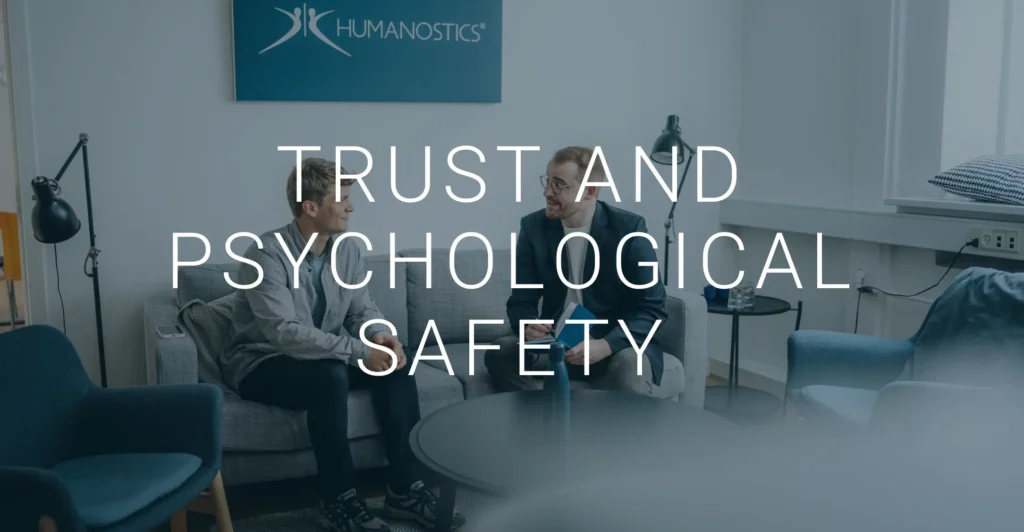
Putting talented people together does not automatically create a high-performing team. A team can have strong individual performers, deep expertise, and plenty of experience, yet still struggle to make good decisions, address problems early, or collaborate effectively. The reason is simple: performance depends not only on what people are capable of, but also on how they work together. Strong teams need trust. They need clarity around roles and expectations. They need to be able to disagree constructively. And they need enough psychological safety for people to say what needs to be said, particularly when doing so may feel uncomfortable. Without those foundations, even a highly capable team can underperform.
Trust is often treated as something slightly intangible: either a team has it, or it does not. In reality, trust shows up in very practical ways. Can I admit when I do not know something? Can I ask for help without worrying about how it will be perceived? Can I challenge an idea without damaging the relationship? Can I acknowledge a mistake? Can I tell a colleague that I see a risk they may have missed?
In the bestselling book The Five Dysfunctions of a Team by Patrick Lencioni, absence of trust is placed at the foundation of the model. Without trust, people become more protective of themselves. That makes healthy disagreement harder, reduces commitment, and makes accountability more difficult. Trust does not mean that everyone agrees. In fact, one of the clearest signs of trust can be a team’s ability to disagree openly and still work well together afterwards. The problem is not conflict itself. The problem is when important disagreement stays hidden.
Psychological safety is closely connected to this. A psychologically safe team is not one where everyone is comfortable all the time. It is a team where people believe they can raise questions, concerns, mistakes, and different perspectives without being punished or dismissed for doing so. That distinction matters because people differ significantly in how naturally they speak up. Leaders need to consider not only whether they are willing to hear different perspectives, but whether the environment they create makes it realistic for different kinds of people to share them.
One way to strengthen trust is to make differences between people easier to understand. As we discussed in last month’s PI Update, it is easy to jump to conclusions about someone’s intentions when we don’t understand their behaviour. Behavioural profiles provide teams with a shared language for discussing differences without making them personal. They help explain why colleagues may communicate differently, approach decisions differently, need different amounts of detail, or respond differently to pressure and change. That understanding can create greater tolerance and shift people’s interpretation from ‘They are not doing this to make my job difficult’ to ‘They simply approach the situation differently from me’. That greater understanding makes trust easier to build.
Skills, experience, and individual talent clearly matter. But they are only part of the equation. The strongest teams also create conditions where those abilities can actually be used: people understand one another, expectations are clear, disagreement is productive, and employees feel able to contribute something that may be difficult, unpopular, or different. For leaders, the question is therefore not only: ‘Do we have the right people on the team?’ It is also: ‘Have we created a team where those people can do their best work together and speak up when it matters most?
All team members play a role in building trust on a team, but when the leaders models the behaviours they expect, trust grows naturally. Here’s what you can do as a leader – or as a team member – to be a role model for building trust:
- Be vulnerable: Share your weaknesses and don’t pretend you have all the answers. Be the leading example for your team.
- Be accountable: Follow through on your commitments and make sure the team holds each other accountable.
- Be deliberate: Sometimes it’s better just to say that the team needs to build trust and that’s why you’re taking specific actions.
- Be transparent: When change comes, it’s important to communicate with staff as soon as possible and be open and honest about what impacted the decision. People can trust transparency—even if they don’t agree with the decision.
- Be open: If team members feel they can’t speak candidly, they may withhold critical feedback. Take time to explain the why behind the thinking. That honesty will make for a more effective team.
NEWS FROM HUMANOSTICS AND PI
PI SOFTWARE UPGRADE COMING!
NEW EXTENDED FEEDBACK GUIDE
During the past many months, a new and improved version of PI Software has been developed and tested. The upgraded software version has lots of new features – most importantly Obi, PI’s behavioral intelligence AI. Humanostics‘ PI clients will be migrated to the new software during the next 10 months, and your contact person will reach out to you personally within the next few weeks to tell you more and agree on a timeline. If you’d like a sneak peak of what the new software version is like, join our free teaser webinar on December 4th 9:00-9:30. Everyone is welcome, even if you are not currently a PI client! Sign up by writing to training@humanostics.com.
Having a feedback conversation with a candidate or colleague about their PI profile has multiple advantages. For the PI Practitioner, it is an opportunity to understand how the profile shows up for that particular individual and how much self-awareness the person has. For the assessment taker, it is a chance to discuss the results and ask questions. Get our best tips and best practices for conducting feedback sessions in our new extended feedback guide. You may also join our free Focus Webinar on giving feedback which we host regularly – next time is on November 25th 09:00-09:45 CET.