
Before you assess the candidate, define the role!
It sounds obvious – but in many recruitment processes, assessment comes after the hiring team has already formed an opinion.
The CV looks right. The conversation felt good. The experience seems relevant.
But the real question is not only: Do we like this candidate?
It is also: How well does this person match what the role actually requires?
That requires clarity before the process begins:
What does success look like, and which behaviours will the role demand?
What level of complexity will the person need to handle?
What is already present in the team—and what may be missing?
When the role is clearly defined, assessment data becomes much easier to use – not as a final answer, but as a way to structure the conversation and support better decisions.
This is part of the focus in our latest newsletter: how HR can move from simply using assessments to creating more strategic influence in conversations about people, roles, and teams.
Want more perspectives like this? Sign up for our newsletter with the link in the comments.
Kategori: Uncategorized @da
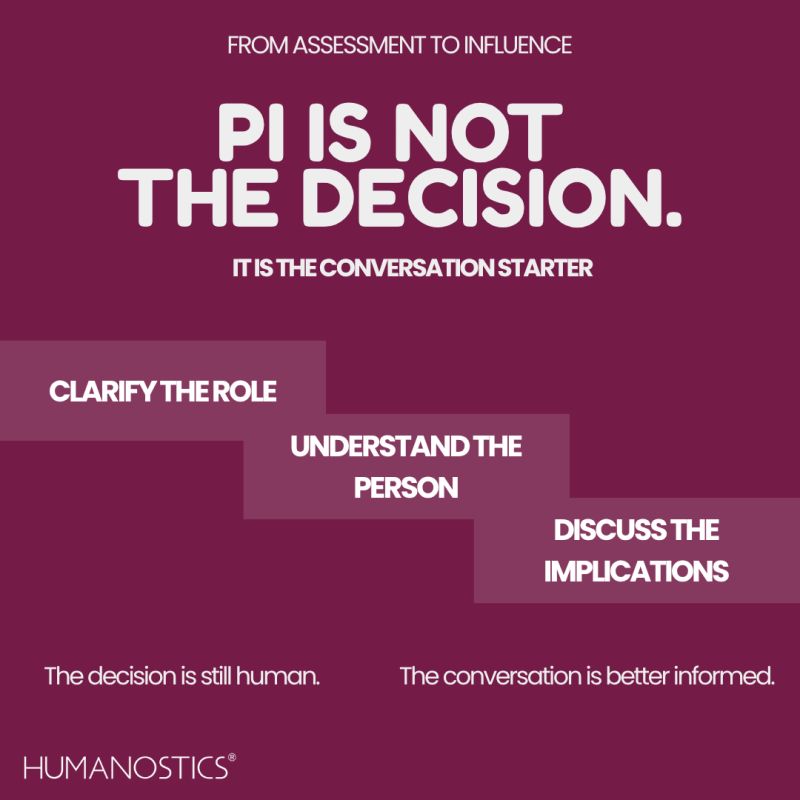
From Assessment to Influence: PI is not the decision…
It is the conversation starter.
Used well, assessment data does not replace judgement. It helps HR and leaders make that judgement more informed.
It creates a clearer foundation for discussing the role, the person and what may be needed for the match to succeed.
This is the final post in our August series: From Assessment to Influence.
The decision is still human.
The conversation is better informed.
Next week, we move on to a new theme.

Poor Job Fit Is Like Writing with the Wrong Hand
Imagine being right-handed.
Now imagine being told to use your left hand at work. Every day.
You could probably do it. But it would take more energy.
You would be slower.
Less natural.
More frustrated over time.
That is often what a poor job fit feels like.
Not because the person lacks talent.
But because the role constantly asks them to work against their natural drives.
This is why defining the behavioural demands of a role matters BEFORE hiring.
When people are matched to roles where they can perform naturally, work becomes less about forcing fit – and more about enabling performance.